2026-09-23
There Was an Odor from My Nose... 1-Month Review of Revision Rhinoplasty After Infection
A detailed 1-month recovery review of revision rhinoplasty after silicone implant removal due to infection, covering early warning signs, post-op care, and natural design principles.
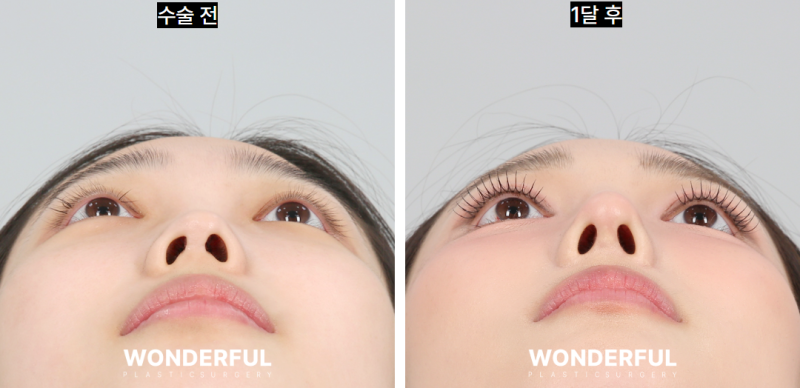
Infected nose, implant removal, revision rhinoplasty performed.
Hello.
This is Wonderful Plastic Surgery.
Among patients who visit us for revision rhinoplasty consultations,
there are quite a few who have had their implants removed due to infection.
The patient we are introducing today also had their silicone implant removed
after developing an infection from their primary rhinoplasty at another clinic.
After struggling for about two years with a flattened nose and deformed shape,
they visited Wonderful Plastic Surgery.
In this post, we will walk you through the revision rhinoplasty process after an infection, the recovery stages,
and the early symptoms of a nasal infection to watch out for.
Unexpected Infection After the First Surgery

After the primary rhinoplasty, the patient had minimal swelling and bruising, leading them to believe recovery was going smoothly.
However, after having a light drink around three weeks post-op,
the condition of their nose changed drastically.
Suddenly,
the glabella and nasal bridge began to swell hard,
the nasal tip turned red with throbbing pain,
and an unusual odor could be detected coming from inside the nose.
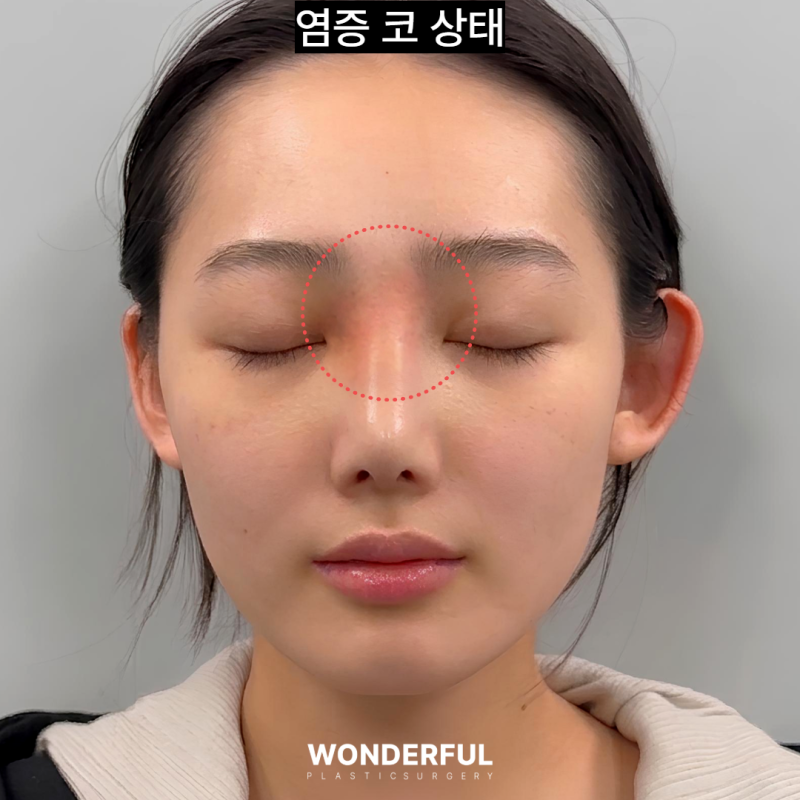
Ultimately, it was diagnosed as an infection,
and the silicone implant had to be surgically removed.
* The causes of nasal infections vary,
and alcohol consumption cannot be conclusively named as the direct cause.
However, strictly adhering to your medical team's post-op precautions during early recovery is critical.
2 Years After Silicone Removal,
Why They Decided on Rhinoplasty Again
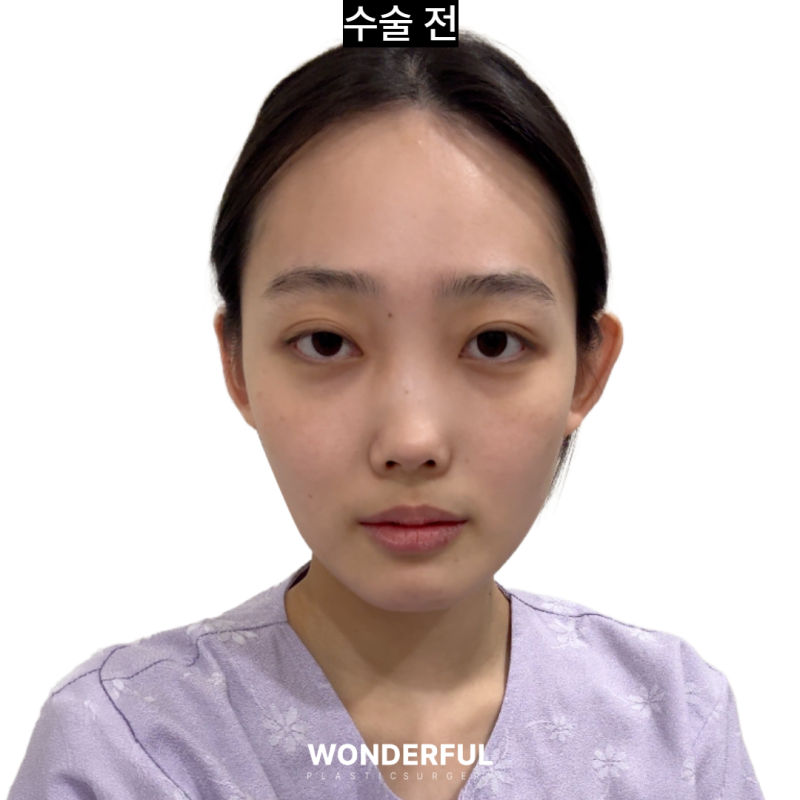
Although the infection resolved after the implant was removed,
the patient faced an entirely new set of concerns.
✔ A nasal bridge that was left too low
✔ Asymmetrical, crooked-looking nostrils
✔ A collapsed nasal profile line
Every time they looked in the mirror, their nose bothered them, leading them to visit Wonderful Plastic Surgery for a revision consultation.
The Most Important Factor in Rhinoplasty
Is 'Design', Not Just 'Height'.
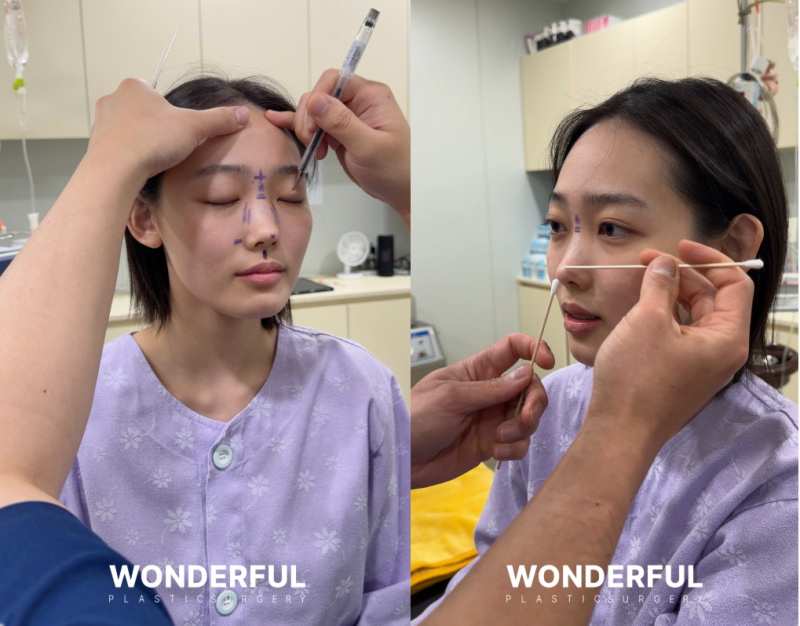
During consultations, many patients say,
"Please raise my nasal bridge as high as possible."
However, what is far more important in rhinoplasty
is a design that harmonizes with the entire face.
In particular,
✔️ The height and contour of the nasal tip
✔️ The starting point of the nasal bridge
✔️ Harmony with overall facial proportions
These three elements determine a natural-looking result.
Wonderful Plastic Surgery analyzes your facial shape and features
to design the most natural and flattering nasal line.
Recovery Process
Day of Surgery

The surgery concluded safely and successfully.
Upon waking from anesthesia,
the patient checked their nose shape first, received an explanation of the recovery process from the operating surgeon,
and was discharged home safely the same day with peace of mind.
Day 3 Post-Op
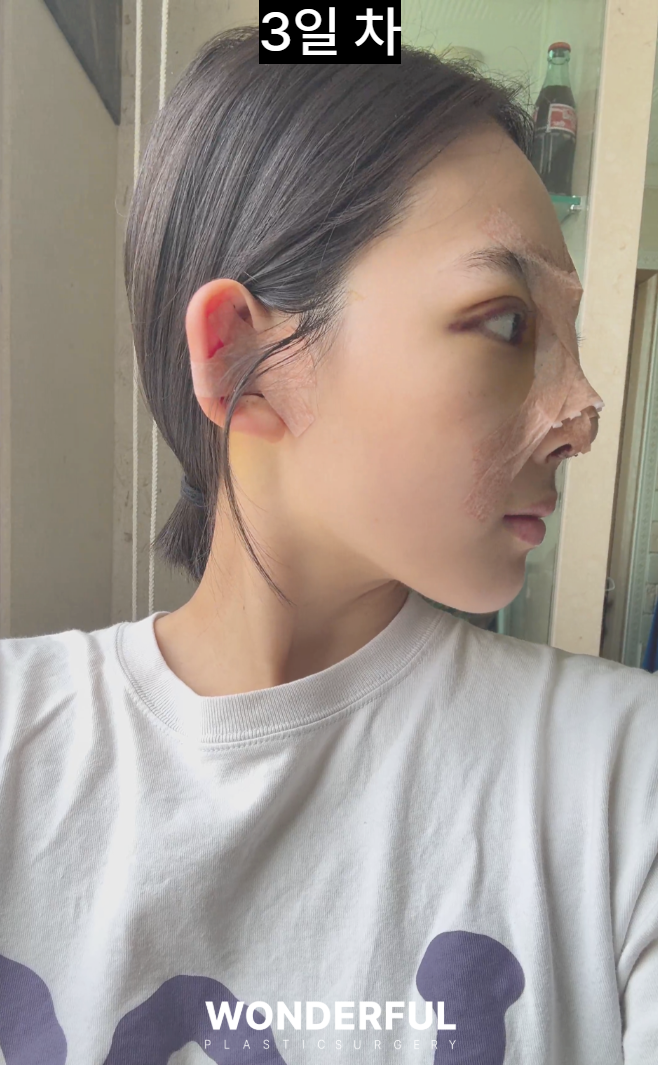
Breathing became significantly easier after the internal nasal packing was removed.
Having experienced an infection during the first surgery, the patient took extra meticulous care during recovery.
✔ Complete abstinence from alcohol
✔ No smoking and avoiding second-hand smoke
✔ Light walks without overexertion
✔ Sleeping with the head elevated
They focused thoroughly on recovery, paying close attention even to minor lifestyle habits.
Day 7 Post-Op

Finally, splint removal day.
Despite being a revision procedure, the nasal line blended naturally with the face,
and there was far less swelling and bruising than anticipated, resulting in very high satisfaction for the patient.
1 Month Post-Op

With most of the major swelling subsided, the natural, dimensional nasal tip the patient wanted was successfully achieved.
In particular, the bridge contour tailored to their facial proportions resulted in a much softer and more refined impression.
The patient expressed great satisfaction, stating:
"What I love the most is that I no longer have to stress over revision surgery anymore."
If You Experience These Symptoms of Nasal Infection,
Be Sure to Get Checked Immediately.
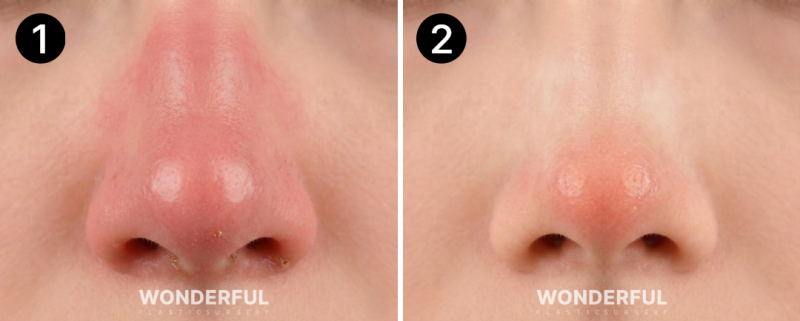
If you experience any of the following symptoms after rhinoplasty,
it is crucial to contact the clinic where you had surgery and undergo an examination as soon as possible.
✔ The nose suddenly becomes hard and swollen.
✔ Redness and heat sensation at the nasal tip persist.
✔ You feel continuous pain or pressure.
✔ There is discharge or an unusual odor coming from inside the nose.
These symptoms do not automatically mean an infection is present, but because an accurate diagnosis is essential,
it is best to seek evaluation from medical professionals rather than diagnosing it yourself.
Revision rhinoplasty is not simply about elevating the nose again.
To achieve a truly satisfying outcome, one must thoroughly analyze the condition from prior surgeries and the extent of tissue recovery,
while carefully tailoring the design to harmonize with the entire face.
Especially if you have a history of implant removal due to infection,
meticulous diagnosis and surgical planning become even more crucial.
If you are contemplating revision rhinoplasty due to similar concerns,
we encourage you to schedule an in-depth consultation to find the approach best suited to your current nasal anatomy.
Frequently Asked Questions
What are the typical symptoms of an infection after rhinoplasty?
Common symptoms include hard nasal swelling, throbbing pain, persistent redness, and an unusual odor or discharge from inside the nose. If the bridge or glabella swells hard or you feel localized heat, seek immediate medical attention from your surgeon.
What happens to the nose's shape when an implant is removed due to infection?
The nasal bridge can flatten significantly, the overall contour may collapse, and the nostrils might appear uneven or skewed. Once the internal tissues stabilize after removal, revision surgery can be planned to restore balanced proportions.
When are nasal packings and splints removed during revision rhinoplasty recovery?
Typically, nasal packings are removed around Day 3 post-op to ease breathing, and external splints are removed on Day 7. Major swelling subsides significantly over the first month.
What post-operative precautions help prevent reinfection?
Strictly avoid alcohol, smoking, and second-hand smoke. Sleep with your head elevated above your heart, avoid strenuous exercise, and stick to light walking while following all clinical care guidelines.